
ALVIM | CONTINUOUS BIOFILM MONITORING
Detect biofilm growth early. Make informed treatment decisions.
ALVIM provides continuous, online monitoring of bacterial biofilm development at its sensing surface. It helps your team follow growth over time and assess the response to cleaning and water-treatment programmes.
Innogiene helps South African food and beverage manufacturers, industrial teams and water-treatment companies explore the right monitoring approach for their systems.
A DIFFERENT VIEW OF YOUR SYSTEM
Why water sampling alone can miss biofilm
Water sampling measures microorganisms present in the collected water. Biofilm develops on surfaces, so water results alone may not reflect attached growth inside pipes and equipment.
ALVIM adds continuous information about biofilm development at its sensing surface. This helps your team assess changes between sampling and treatment cycles.
Use biofilm monitoring alongside water sampling, laboratory testing and knowledge of your process to build a fuller picture of system conditions.
Read ALVIM’s explanation of water sampling and biofilm monitoring ↗
What continuous monitoring helps you understand
When growth begins
Follow early bacterial colonisation at the monitoring point and identify changes that warrant attention.
How treatment responds
Review monitoring data alongside cleaning and dosing records to assess treatment effectiveness.
What happens between cycles
Track recurring patterns and use the findings to inform reviews of treatment timing and operating conditions.
SENSOR SELECTION
Choose a sensor for your application
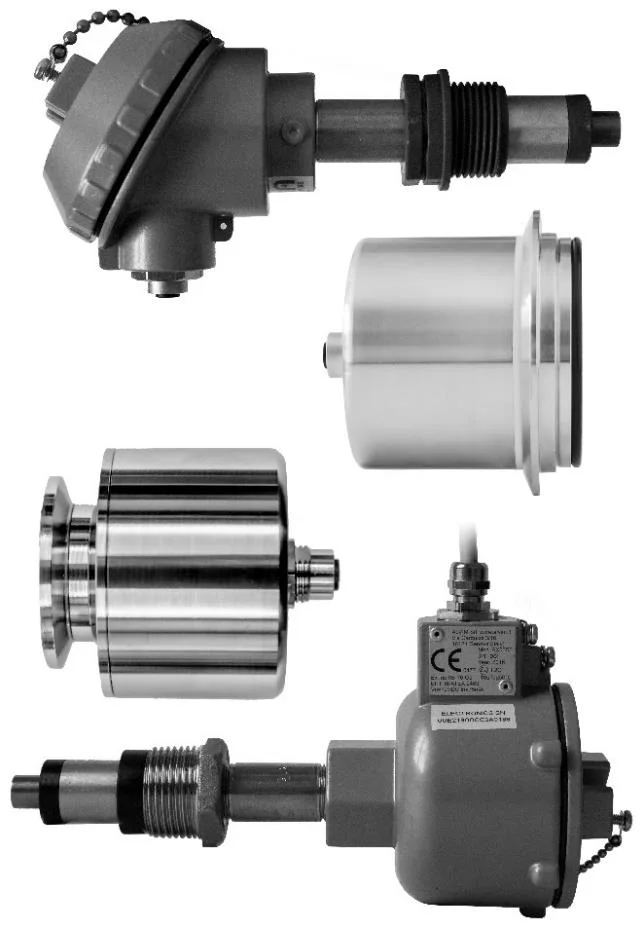
Process connections, materials and operating conditions influence sensor selection. These two models provide starting points for industrial and hygiene-critical applications.
INDUSTRIAL APPLICATIONS
A001S3
ALVIM’s standard industrial sensor. Its corrosion resistance makes it particularly suited to seawater applications.
Connection: 1″ BSPP thread.
Process-contact materials: Titanium, zinc and PVC.
Operating temperature: Above −10°C and below +60°C.
Conductivity: Greater than 10 μS/cm.
HYGIENE-CRITICAL APPLICATIONS
AS01S3
A hygienic sensor with a flat process-contact surface and high resistance to chemical treatments, intended for applications where hygiene is critical.
Connection: VARIVENT® Type N, for pipes from DN40 to DN150.
Process-contact materials: Stainless steel, coated titanium, PEEK and EPDM.
Operating temperature: Above −10°C and below +150°C.
Conductivity: Greater than 30 μS/cm.
Shared requirements: Both supplied data sheets specify biofilm-growth monitoring above +2°C and below +40°C, pressure below 10 bar, and dissolved oxygen above 1 ppm. The A001S3 oxygen requirement is specified for maximum sensitivity. Both provide 4–20 mA and RS485/MODBUS RTU communication.
Operating temperature tolerance is different from the temperature range for monitoring biofilm growth. Confirm the complete specification, chemical compatibility and installation requirements for your application before selecting a model.
Summary based on the supplied ALVIM A001S3 and AS01S3 data sheets. Other sensor configurations are available. VARIVENT is a registered trademark of GEA Tuchenhagen.
Watch the ALVIM introduction
YOUR QUESTIONS ANSWERED
ALVIM frequently asked questions
How does ALVIM detect biofilm?
ALVIM measures the natural bioelectrochemical activity associated with living bacterial biofilm on its sensing surface. This provides information about surface colonisation rather than simply measuring microorganisms in a water sample.
Does ALVIM replace water sampling or pathogen testing?
Use ALVIM alongside your sampling and testing programme. Surface biofilm monitoring answers a different question from water analysis and does not identify specific pathogens or certify the microbiological safety of a system.
How is a biofilm sensor different from a fouling sensor?
Fouling includes deposits such as minerals, fats, proteins and microorganisms. ALVIM is designed to detect bacterial biofilm activity, helping distinguish biological growth from other deposits that may require different treatment.
Is ALVIM the same as an ORP probe?
No. An ORP probe measures oxidation-reduction potential. ALVIM measures biofilm electrochemical activity. Although readings may be expressed in millivolts, the measurements have different meanings.
Why is early detection useful?
Monitoring early colonisation gives your team information before a mature biofilm becomes established. It can support timely treatment decisions and assessment of the response, interpreted alongside system conditions and other findings.
How many sensors will my system need?
The number depends on system layout and differences in flow, temperature and treatment exposure. One monitoring point may suit a relatively uniform system; more complex systems may benefit from several. Installation locations should be selected with technical guidance.
Can ALVIM connect to an existing monitoring system?
The A001S3 and AS01S3 data sheets specify 4–20 mA and RS485/MODBUS RTU communication. Integration, power requirements and configuration should be reviewed with your technical team for the selected model.
What support is available?
ALVIM describes manufacturer support for installation-point selection, system use and interpretation of data. Speak to Innogiene to confirm the support and training arrangements for your proposed installation.
Answers summarised from the ALVIM manufacturer FAQs and supplied technical documentation. Read the full manufacturer FAQs ↗
Explore applications and technical resources
Explore manufacturer examples from food and beverage production, or review ALVIM’s sensor documentation before discussing your requirements.
Read case studies and customer testimonials →
View ALVIM’s brochure, sensor data sheets and research resources ↗
Find the right monitoring approach for your system
Tell us about your process, water conditions, treatment programme and monitoring objectives. We will help you discuss suitable sensor options and the next steps.