
Recurring microbiological results can be frustrating for food safety and hygiene teams. You investigate, clean and sanitise, and the results improve—only for the problem to return weeks later.
There can be several reasons for recurring contamination. One possibility worth investigating is biofilm: a community of microorganisms attached to a surface and embedded in a protective matrix.
When biofilm is suspected, the challenge is knowing where to look. TBF300 gives teams a practical way to investigate accessible surfaces after cleaning and disinfection, helping make biofilm deposits visible and guiding the next steps.
Why biofilm can be difficult to find
A surface can look clean and still warrant closer investigation. Biofilm may develop in areas where moisture and residues remain, or where equipment is difficult to clean thoroughly.
During an investigation, consider accessible areas such as:
- Gaskets, seals, joints and connections.
- Welds, corners, crevices and scratched surfaces.
- Drain surrounds and areas where water collects.
- Undersides, frameworks and other hard-to-reach equipment surfaces.
- Areas associated with repeated positive microbiological results.
Routine microbiological testing remains essential. A surface test can add another piece of information by helping the team investigate whether biofilm is present at selected points.
What is TBF300?
TBF300 is a rapid test for detecting microbial biofilm on accessible, open surfaces. It is designed for use after cleaning and disinfection and complements other hygiene monitoring methods.
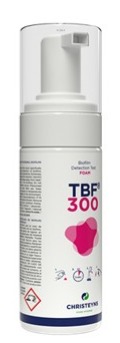
The test uses a pink foam to help reveal biofilm deposits. After the required contact time and rinsing, pink colour that remains on the surface indicates biofilm, according to the manufacturer’s instructions.
How to use TBF300
Following cleaning and disinfection, select a suitable accessible test point and follow the manufacturer’s instructions:
- Apply the foam to an area of approximately 10 cm².
- Allow a contact time of at least five minutes.
- Rinse the area with water to remove the foam.
- Check whether pink colour remains on the surface.
The foam is pink when it is applied. Read the result after the contact time and rinsing: pink colour remaining on the test surface indicates biofilm.
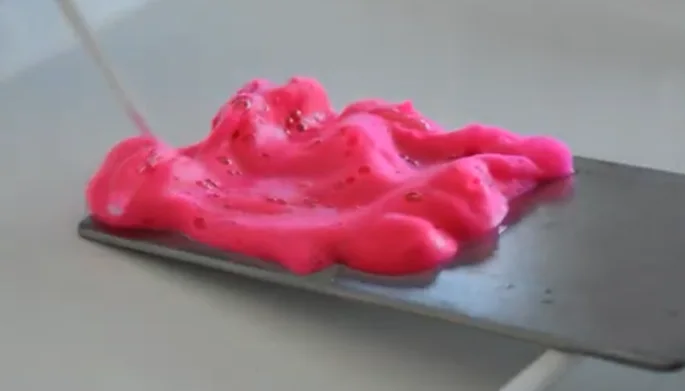
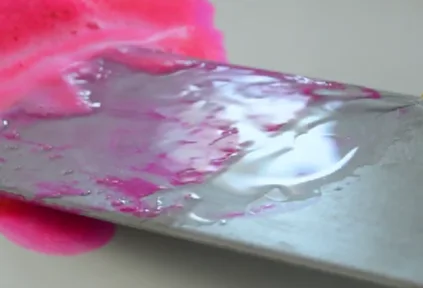
Do not apply TBF300 to porous materials such as wood, fabric or cardboard, as they may retain the dye permanently. If you are unsure whether a material is suitable, test a small sample first. Follow the product label and technical data sheet when using the test.
Where should you test?
Choose test points as part of your wider hygiene investigation. Start with areas that are accessible and have a reason to be checked:
- Where have microbial results repeatedly raised concerns?
- Where do water or product residues tend to collect?
- Which surfaces are difficult to reach during routine cleaning?
- Are there joints, seals or damaged surfaces that need closer inspection?
Record the location and result of each test. This gives your team a clearer picture of the areas investigated and helps direct follow-up cleaning and verification.
What should you do after a positive result?
A positive result gives your team a specific area to investigate and address. Consider the surface, surrounding equipment and cleaning conditions when planning the next step.
The manufacturer recommends cleaning and disinfecting the affected surface using biofilm-removing products. Innogiene can help you select a targeted cleaning programme suited to the equipment and the nature of the problem.
After treatment, follow-up testing and your normal microbiological monitoring can help assess the result and inform any changes to the routine cleaning programme.
Investigate → Detect → Remove → Verify → Maintain control
How does TBF300 differ from BioFinder?
BioFinder and TBF300 provide different information and can support the same investigation.
- BioFinder is a biofilm detection aid and hygiene indicator. Bubbling can draw attention to residual contamination or possible biofilm on an accessible surface, prompting further investigation.
- TBF300 helps reveal biofilm deposits through pink staining that remains after the test surface has been rinsed.
Neither test identifies a specific microorganism or replaces microbiological testing. Use the results alongside your facility’s hygiene monitoring and investigation procedures.
Watch TBF300 in action
This demonstration shows the application of TBF300 and the appearance of a positive result.
Choose the right detection method
TBF300 is intended for accessible surfaces that can be inspected directly. Closed water systems need a different approach: the ALVIM Biofilm Sensor provides continuous monitoring at an installed sensor point.
Explore TBF300 or compare biofilm detection methods to find a suitable starting point for your investigation.
Need help investigating recurring contamination?
If your team is dealing with recurring microbial results or wants to investigate a suspected biofilm problem, tell us what you are experiencing. We can help you consider the appropriate detection and removal options for your facility.